The morning goes something like this: you arrive at childcare, your child who seemed fine in the car suddenly grips you with both arms and doesn't let go. They cry. You try to extract yourself gently. They cry harder. You feel terrible, peel them off with the help of a kind educator, walk out the door, and spend the next hour wondering if you've done something irreparable.
You haven't.
Separation anxiety at drop-off is one of the most common experiences for families starting childcare, and one of the most misunderstood. Here's what's actually happening, and what actually helps.
What Separation Anxiety Actually Tells You
First, the reassuring part: separation anxiety is a sign of healthy attachment. Children who experience it aren't damaged or insecure; they're demonstrating that they have formed a close bond with their primary caregiver and are working through the developmentally appropriate challenge of separation.
Stranger anxiety typically appears around 6–8 months, and separation anxiety peaks between 10 and 18 months before gradually reducing. However, it can return or intensify during times of transition — including starting childcare, moving rooms, or changes in the family. It can also surface again in two-and-a-half to three-year-olds, often at a time that surprises parents who thought they were past it.
The distress is real. So is the fact that most children settle within minutes of the parent leaving — often faster than the parent expected.
What Happens After You Leave
Here's what's consistently found in childcare research, and what educators see every day: the vast majority of children who cry at drop-off settle within minutes once their parent has left the building.
This doesn't mean the feelings weren't real. It means children are incredibly capable adapters; they transition between emotional states far faster than adults, and the secure, engaging environment of a quality childcare centre helps enormously.
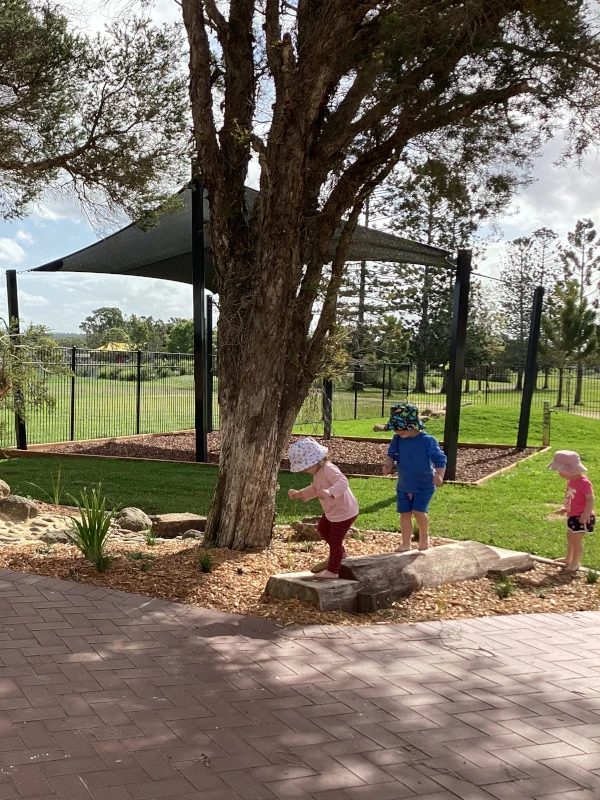
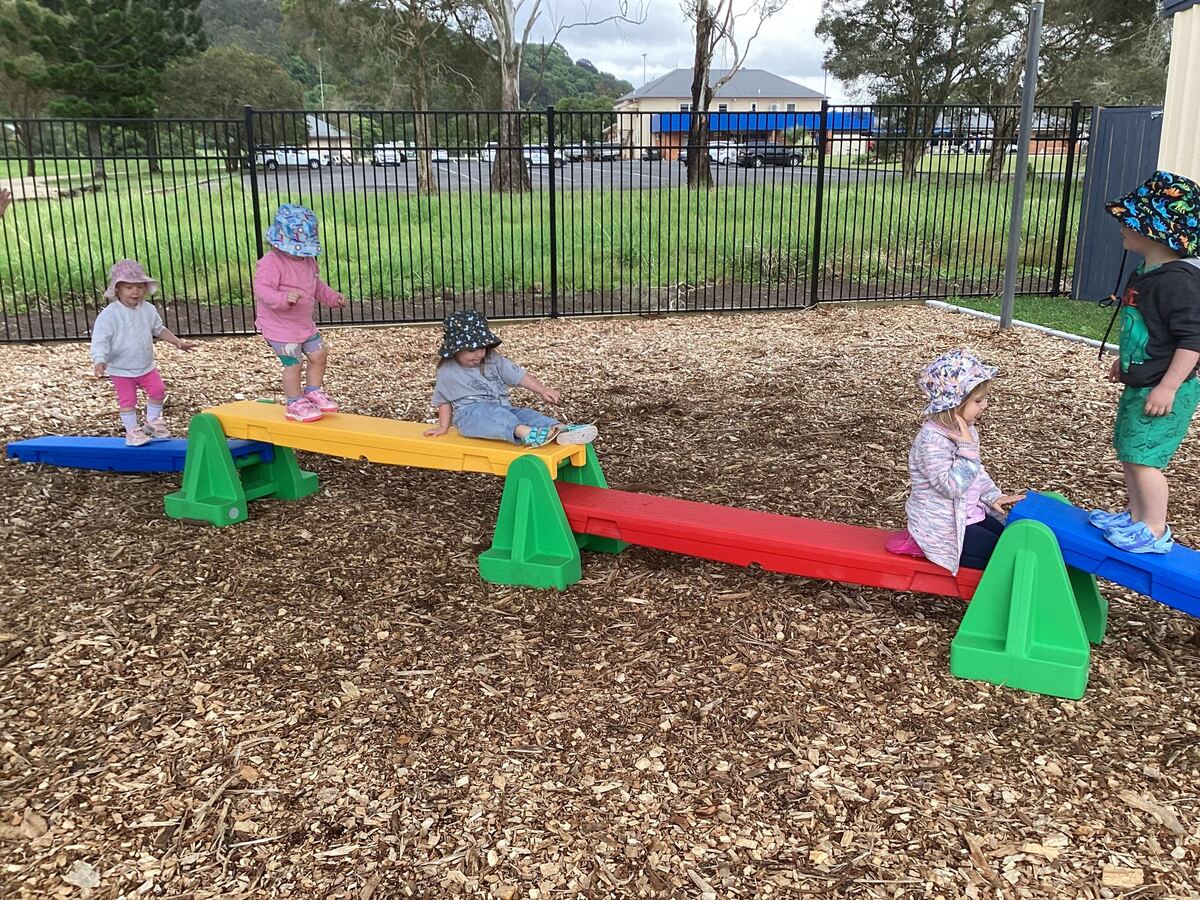
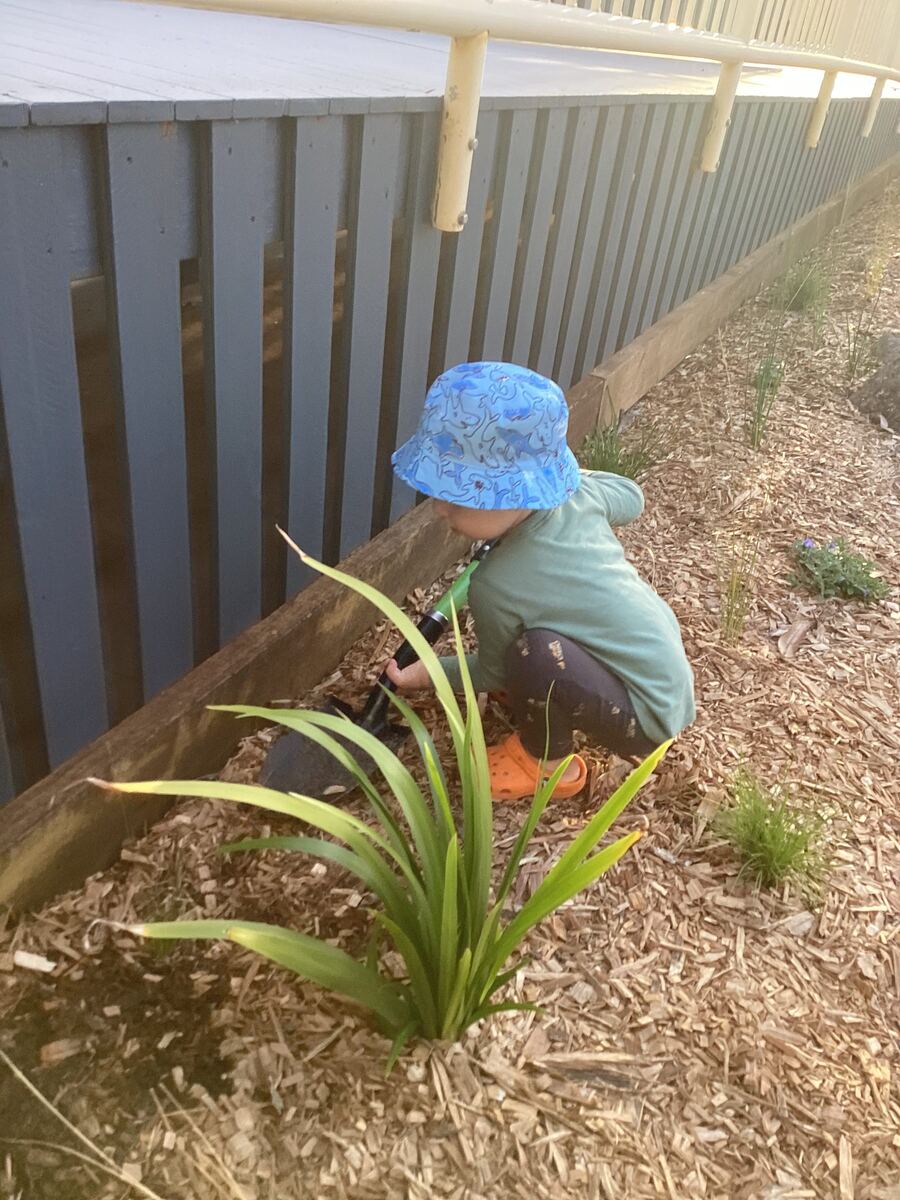
If you're genuinely uncertain about how your child is settling, ask your educators directly. Any quality service will be happy to send you an update after drop-off. Most of the time, parents are astonished by the photo of their apparently distraught child happily painting or playing on the climbing equipment twenty minutes later.
What Actually Helps at Drop-Off
The research on this is fairly clear, and some of it runs counter to instinct:
Create a goodbye ritual and stick to it. A consistent, brief ritual (a special hug, a wave from the gate, a particular phrase) gives children a predictable framework for the separation. The predictability itself is calming. Do it the same way every time.
Don't sneak out. It's tempting to disappear when your child is momentarily distracted. Don't. Discovering that a parent has gone without goodbye creates more anxiety, not less — children learn that separation can happen at any moment, without warning, which makes every moment of distraction feel risky.
Say goodbye once, warmly, and leave. Prolonged goodbyes — where a parent repeatedly comes back because the child is upset — inadvertently signal to the child that if they cry hard enough, the parent will return. This makes separation harder. The kindest thing is a warm, confident goodbye and then a decisive exit.
Keep your own affect regulated. Children are exquisitely sensitive to parental anxiety. If your face and body communicate that leaving is distressing for you, your child will read that and respond accordingly. Try to bring a genuinely warm, calm confidence to the goodbye — even if you're feeling anything but.
Trust the educators. The educator who gently takes your child at the door knows what they're doing. The transition is their expertise. Let them do it.
For Families New to Lismore
A particular note for families who've recently moved to Lismore — whether for SCU, for work, or for the housing opportunities that have opened up in the region over recent years.
Starting childcare is a transition layered on top of other transitions when you're new to a place. You don't yet have the local knowledge that tells you which services are good, which families to call if something comes up, who to trust.
This is real, and it's worth naming. Childcare in Lismore is also, genuinely, one of the ways families build community here. Your child's childcare service introduces you to other families. Educators become people you know. The social connections that start at drop-off often become the basis of family friendships that last for years.
Starting childcare isn't just a logistics decision. In a new city, it's often the beginning of finding your people.
The Transition Phase: What to Expect
Most services use a graduated settling-in process. This typically involves:
- An initial visit where parent and child explore the environment together
- Short stays where the parent leaves briefly and returns, building the child's confidence that departure means return
- Gradually extended sessions as the child's comfort grows
This process takes longer for some children than others. A child who has experienced disruption — housing moves, illness, family stress — may need a more gentle and extended settling-in. That's not a reflection of anything being wrong. It's a reflection of what that child has navigated, and what they need to feel safe.
We meet each child where they are. Always.
At Explorers
At our South Lismore service, settling in is a process we take seriously and handle with genuine care. We build relationships with families before children start, we work collaboratively on settling plans, and we maintain transparent communication throughout — including updates after drop-off whenever families need them.
Our educators understand that the child who cries at the gate is trusting us enormously by eventually letting us in. We hold that trust carefully.
Book a tour or call us on (02) 6621 5037.