There's a moment every parent knows. Your child scrambles to the top of something — a log, a climbing frame, a pile of rocks — and your stomach drops slightly before your brain catches up. Should I stop them?
Our answer, most of the time, is no.
At Explorers, we actively build risky play into our outdoor environment. Not because we're cavalier about safety, but because the evidence is overwhelming: children who are never allowed to take physical risks miss out on something developmentally essential. And we think the parents we work with deserve to understand why.
What Is Risky Play?
Risky play is physical play with a real (if managed) chance of getting hurt. It includes:
- Climbing: trees, structures, rocks, anything climbable
- Rough-and-tumble: wrestling, chasing, play-fighting
- Height: jumping, swinging, dropping from things
- Speed: running fast, riding, sliding
- Disappearing: playing where adults can't see you (important for older preschoolers)
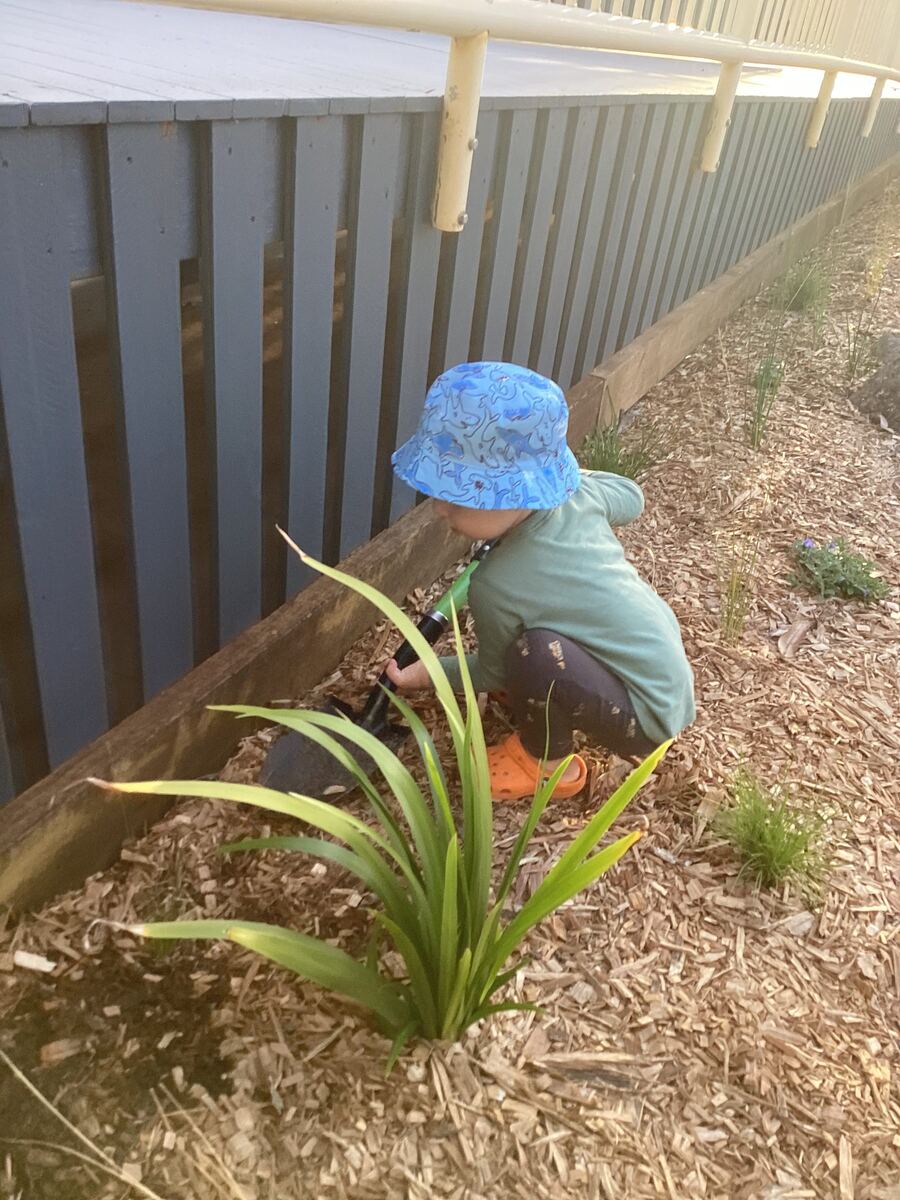
- Tools: sticks, digging implements, anything with an edge or weight
These categories come from researcher Ellen Beate Hansen Sandseter, one of the leading voices in risky play science. Her work — and the body of research that followed — consistently shows that children are biologically driven to seek these experiences.
That drive exists for a reason.
The Case for Letting Children Fall
When a child climbs a tree and doesn't fall, they learn where their limits are. When they climb and do fall — softly, from a manageable height — they learn something even more valuable: that failure isn't catastrophic, that they can recover, that their body is more capable than they feared.
This is how risk calibration develops. Children who are consistently protected from all physical risk don't become safer — they become less able to assess danger accurately. They lack the experiential data. A child who has never been allowed to gauge a jump from height has no framework for knowing which jumps are manageable.
There's also a strong anxiety connection. Researchers at the Norwegian University of Science and Technology found that children with less exposure to risky play showed higher rates of anxiety symptoms. The mechanism makes intuitive sense: risky play is, in effect, graduated exposure therapy. The child encounters something uncertain, manages it, and builds confidence — body and mind.
Physical Development You Can't Get Any Other Way
Beyond the psychological, there's straightforward physical development at stake.
Climbing develops upper body strength, grip, coordination and spatial awareness in ways that structured PE simply can't replicate. The unpredictability of natural environments — a branch that wobbles, a rock that shifts — trains proprioception and balance far more effectively than a static climbing frame.
Rough-and-tumble play develops body awareness, teaches children to read physical cues from others, and builds the ability to modulate force — to know the difference between a playful push and a rough one. These are social skills as much as physical ones.
In our Adventurers and Voyagers rooms at Explorers, we pay close attention to what children's bodies are telling them they need. A group of four-year-olds who've been sitting with an activity for twenty minutes and are starting to fidget aren't being difficult — they're asking for movement. We listen.
Risky Play Is Not Reckless Play
This is the distinction that matters, and it's one our educators hold carefully.
Risky play has an element of genuine uncertainty: the child doesn't know for sure that they'll make the jump. That uncertainty is the point. It's where the learning lives.
Reckless play involves hazards the child has no ability to assess or manage: a six-year-old on a roof, a two-year-old near an open water source unsupervised. These are genuine dangers, and they're not what we're talking about.
Our role as educators isn't to eliminate risk. It's to create environments where the risks are real but proportionate — where children can test themselves and occasionally fail, within a context where the consequences are manageable. We look at each outdoor experience and ask: what's the benefit, and is the hazard one the child can engage with and learn from?
That's a very different question from "how do we make sure nothing goes wrong."
What This Looks Like at Explorers
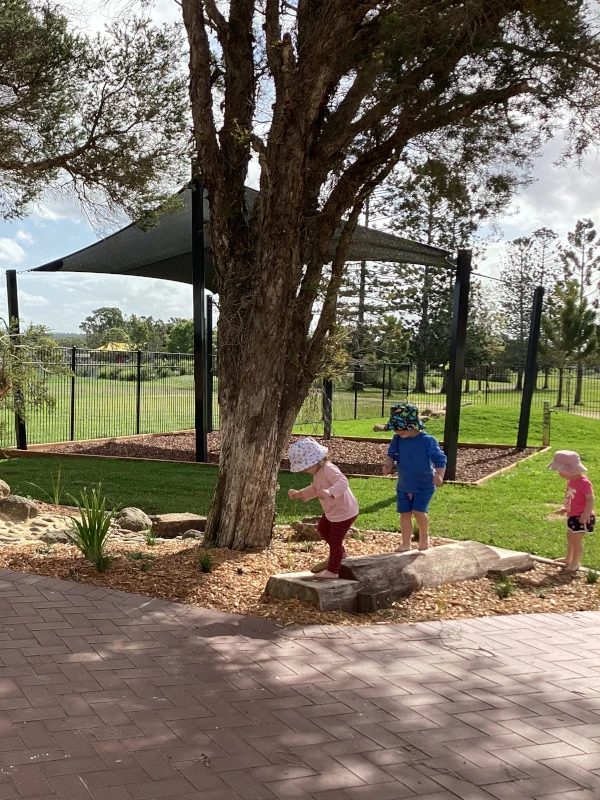
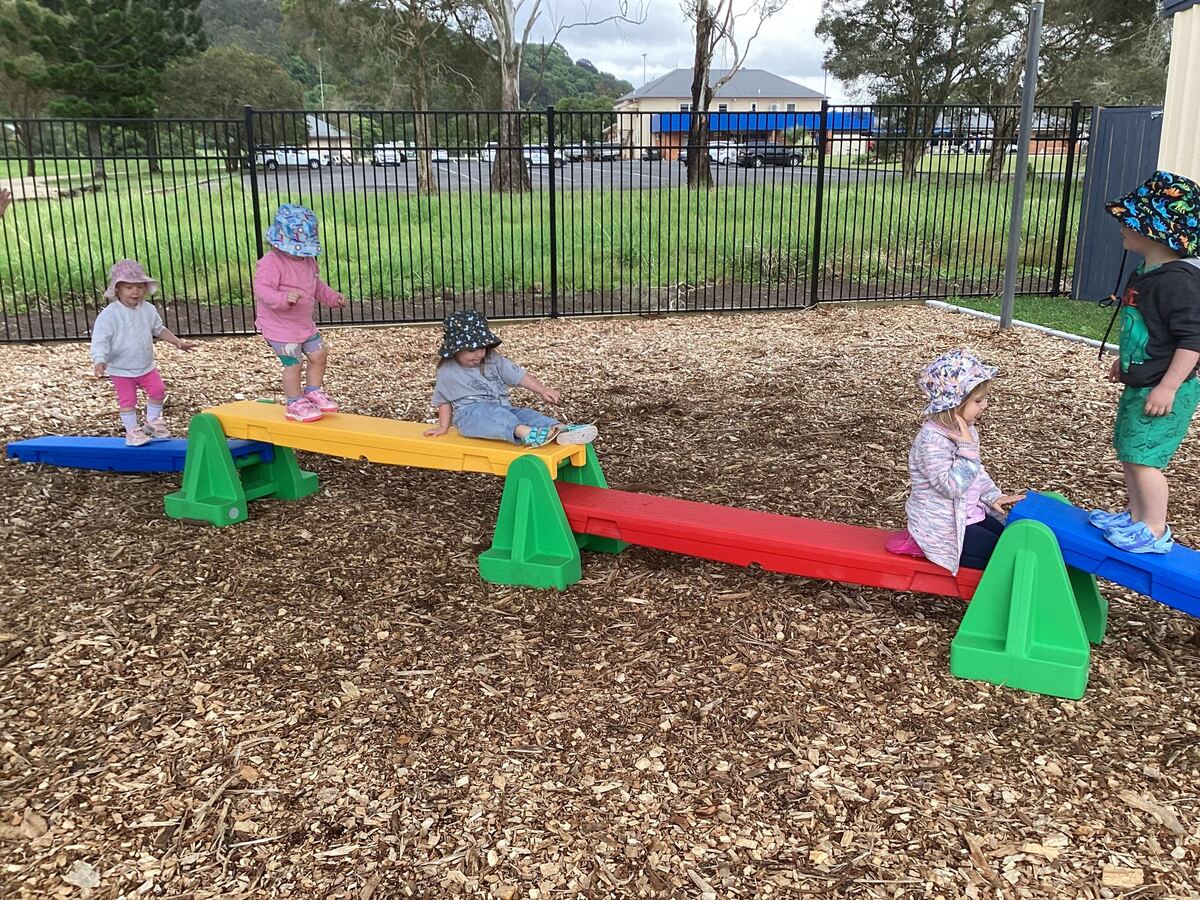
Our outdoor environment in South Lismore is intentionally designed to offer genuine physical challenge. Children have access to natural materials — logs, rocks, rope, sticks. Our climbing structures have real height. We have areas where children can dig, build and demolish.
We also have a culture of asking before intervening. When a child is attempting something physically challenging, our first instinct isn't to step in. It's to watch, stay close, and let them work it out. We offer a hand when asked, not before.
The Northern Rivers is a gift for this kind of childhood. After rain, our outdoor space transforms. Puddles become physics experiments. Mud becomes building material. A fallen branch becomes an obstacle course that children design and redesign all morning.
A Word to Parents Who Find This Hard
It's okay if watching risky play is uncomfortable. It's a completely normal response, and it doesn't make you an overprotective parent — it makes you a parent who loves their child.
What we'd invite you to notice, when you can, is what your child looks like after the risky play. The confidence in how they carry themselves. The way they report back what they did. The pride, which is a quiet kind, in having done something hard.
That's not just fun. That's a child becoming someone who believes in themselves.
And that — more than any academic skill we could name — is what we're here to build.
Explorers School of Early Learning is a nature-based childcare and preschool at 45 Wilson Street, South Lismore. Book a tour or call us on (02) 6621 5037.